



Coaching for individuals and teams
Every day life with children can often push us to our limits. It can be overwhelming, and knowing how to proceed when we feel stuck requires an outside perspective and the courage to change.
With my personalised approach, I help you identify what needs to change and provide the tools and strategies to put those changes into action in a meaningful and sustainable way.
Rather than a one-size-fits-all solution, this bespoke approach empowers you to develop and refine your own techniques and tools, and adapt them to your environment and circumstances in a way that feels authentic and natural.
Is your goal an outdoor project, micro farming, or creating a clay house or clay oven where children are at the centre of the work, demonstrating and expanding their engineering skills? Or do you envision an educational "I Can…!" concept that unites educators and parents, bringing clarity and collaboration to child development?
This concept also focuses on who is responsible for providing support: the institution and/or parents.
The optimal use of both resources (parents and caregivers) and locations (institution and home) results in meaningful and lasting positive development for the children.
Through close observation of your current practice, I will work with you to identify where you want to be and the steps needed to move forward. Together, we’ll develop a goal that aligns with your needs and the needs of the children, parents, and staff of your institution. The result is a stronger sense of unity in the child's immediate environment and the opportunity to celebrate successes together. I also draw on my extensive experience in project-based learning when coaching.

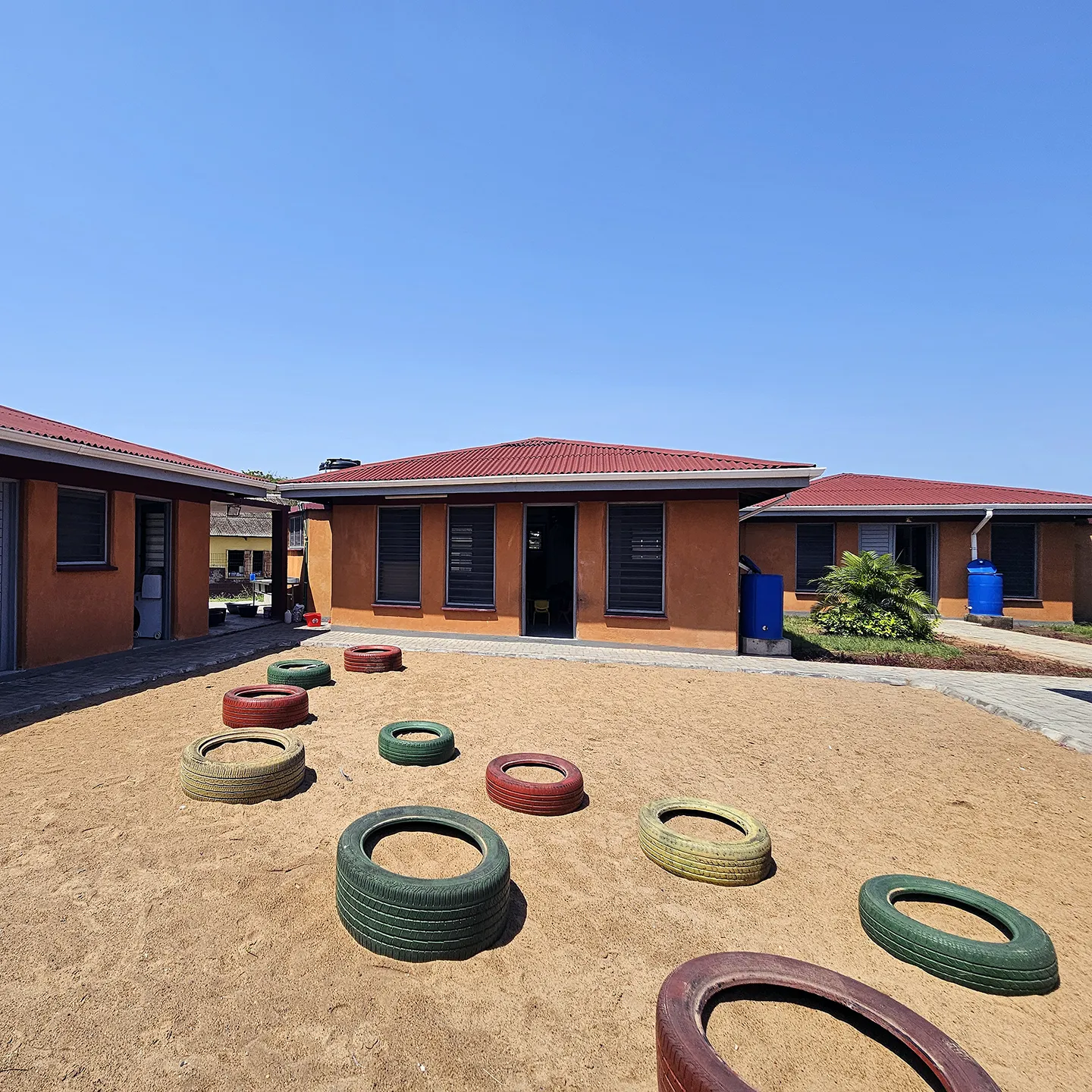
Building a clay house with children: engineers and artists at work
Once you have held clay in your hands and felt it between your toes, you will never want to let it go. The unique experience of shaping this material awakens a joy in children and adults alike that they will never want to lose.
Building a house out of clay is possible even with small children. It requires a large amount of clay soil, straw, water, a sturdy tarpaulin, and many hands and feet to help mix these materials together into a sticky mass. Children of all ages can help mix the materials, but adults need to be there to assist with certain steps. Teamwork is very important when building a mud house.
The planning of a clay-mud house incorporates the local culture and architectural traditions. Looking at the work of famous architects and artists provides a welcome starting point for planning the colors and forms of an earthen house. Imagination is greatly encouraged, and implementing children's ideas takes precedence. While the wall and roof construction requires a certain degree of structural stability and conformity, there is still plenty of room for imagination.
The homemade mud house adds an intensity to outdoor role-playing that is hard to beat. Whether it's a house, supermarket, horse stable, or hospital, it can be adapted to the children's play ideas with the help of a few utensils. Watching natural phenomena such as rain, snow, and hail from the shelter of the mud house is a unique nature experience for children.
Timely planning for this project is necessary, as the actual construction phase requires 3-4 days of sunshine and temperatures around 20 degrees Celsius to allow the walls to dry thoroughly.
From earth oven construction to cookbook: child's play
Building an earth oven and creating a personalized cookbook are inextricably linked. Cooking harvested vegetables in a self-built earth oven is a deeply moving experience. Using local materials like straw, clay, and bricks, the construction becomes an architectural engineering project unlike any other. Children and adults alike gather information on complex topics such as soil composition, building materials (bricks, fireclay, straw, clay), statics, and, of course, art and culture.
The sandbox and the earth where the children play become a living laboratory, as a simple soil analysis is essential. Perhaps the sought-after building material, clay, is already beneath their feet? Choosing the right location for an earth oven requires thorough planning: a 3D model and site plan of the property, as well as fire safety training, are all part of the to-do list.
Earth ovens are a cultural heritage that is still actively maintained in many countries and cultures. It's worth taking a look around your neighborhood! Maybe there's still an earth oven nearby!
Baking and cooking in an earth oven is the safest form of outdoor food preparation.
With a little practice, the most delicious dishes are created, which are immediately documented with photos and painted recipes. The end result of each year is a fantastic earth oven cookbook, compiled with all the delicious dishes that the children have cooked and baked. It also includes building instructions, because do-it-yourself is encouraged!
Outdoor concept development: Individual planning and implementation with children
Perhaps you already have an outdoor area (1. tree house/2. road construction/3. loose play) that is not being used efficiently, or you are planning a new nature-based educational concept. In any case, you should involve the children in every phase, from the idea to the planning to the implementation. Active sustainable landscaping with and for children offers a unique opportunity to anchor project-based learning in everyday life.
The outdoor area can be transformed into a learning and experimentation environment in many different ways. A selection of so-called loose-play materials, such as boards, barrels, pipes, thick ropes, boxes, wooden blocks, and tree trunks, is standard for this experimentation area. Children can carry, roll, or push these materials as they please and use them to build their own roads, bridges, houses, or even obstacle courses. The landscape of the outdoor area changes with each construction project, and the children's ideas become visible. Physical effort is also required, and teamwork often plays a role. According to the motto "Together we can do it!", thick tree trunks are pushed or pulled through the outdoor area until they are in the planned location.
A treehouse or a road for vehicles are comprehensive projects that require intensive planning, and depending on the size of the project, the corresponding costs must be budgeted for.
There are endless options for designing outdoor spaces. The potential of the environment, including existing landscape features such as trees, hills, and valleys, is taken into account in the planning. Step by step, the outdoor space that children and adults alike dream of unfolds.
Micro farming with children: the foundation of self-sufficiency
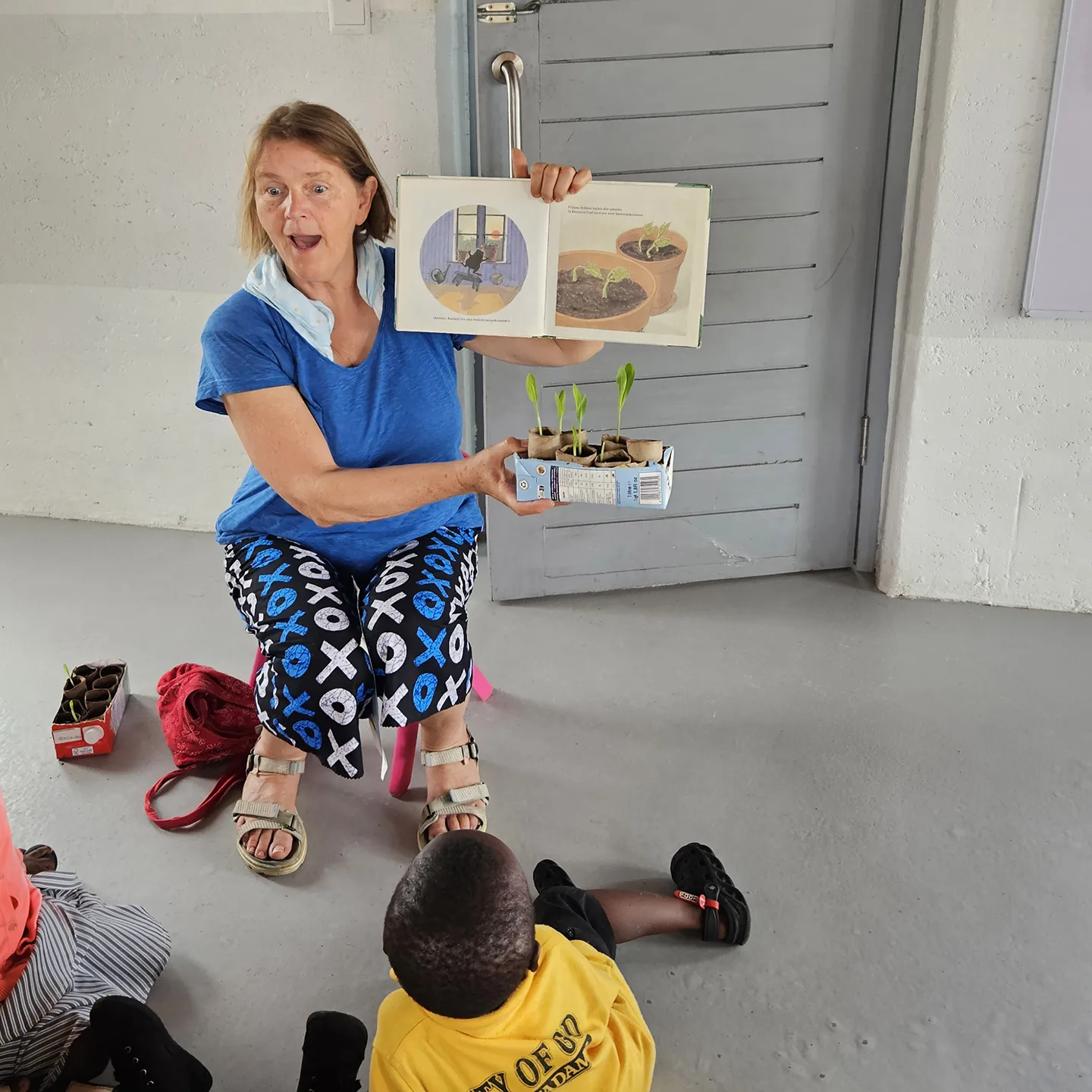
From the seeds we collect from our fresh fruit and vegetables, to the seed library, seed books, a vegetable patch, the compost heap, a harvest festival, and the clay oven and corresponding cookbook, everything finds its place in the Micro Farming project. Both the children and their supervisors learn hands-on throughout the annual cycle about the food chain and wider food system. It is a sustainable experience that not only covers areas of biology, mathematics, and literature but also promotes lifelong physical and mental resilience and adaptability. With a lot of physical effort and perseverance, it is possible to grow vegetables and fruit yourself, despite the occasional snail infestation, dry spells, or hailstorms.
The harvested vegetables and fruit ultimately reward all the hard-working gardeners!
Discover the "I Can..." System
Informed by decades of real-world experience supporting parents with their child’s educational journey, I developed the ‘I Can’ system as a comprehensive pedagogical guide to help parents confidently support their child’s learning at home and beyond.
The guide, which features 60 ‘I Can….’ cards and a corresponding manual, takes into consideration the fundamental skills and milestones that we encourage children to meet throughout their time at kindergarten. The cards cover social and emotional development, life skills, language proficiency, physical development, and cognitive development, and are designed to be used flexibly, based on the age and stage of each child.
The concept is simple: at the start of the school year, parents are given the I Can pack and encouraged to use the cards to chart the current development of their child. Each card features a positive ‘I Can…’ affirmation, such as 'I Can happily say see you later to mummy and daddy', or 'I Can enjoy Circle Time.'
As the academic year progresses, we suggest that parents continue to revisit the cards and guide, tracking development and using the structured, practical advice to inform their support strategies.
It is important to note that the I Can guide is not something to be completed; rather, it’s designed to be an evolving resource that supports reflection, conversation, and responsive guidance as children grow and develop at their own pace.
Teachers also use the very same guide to assess and support each child on their learning journey, so the I Can system fosters supportive, mutual collaboration between the home environment and the school environment. Ensuring that parents and educators are on the same page is key to providing thoughtful, individualised support to each child on their education journey. By using the same framework, we also ensure that communication between school and home is clear and transparent. This reduces the incidence of misunderstanding or miscommunication.
I developed these cards, initially based on need. In my experience, many parents often feel a bit lost when their child first starts school. There is so much new information to juggle, and it can feel overwhelming. With the aid of this practical resource, they often feel better supported and more empowered in their journey at school, as well as in their parental journey.
As children grow and develop, they can also be actively included in the I Can journey. The guide is about them, but it is also for them. Parents are encouraged to explore the cards alongside their child, celebrating achievements, discussing challenges, and using the affirmations as a shared language to build confidence, self-awareness, and a sense of ownership over their own learning.
Ultimately, the I Can system is a versatile resource: one that has supported hundreds of parents, teachers, and children, and continues to prove its value across ages, stages, and learning journeys.
Its strength lies in its adaptability: the principles remain relevant as children grow, empowering not only young learners but the adults who guide them, and reinforcing the belief that confidence, capability, and learning are lifelong.